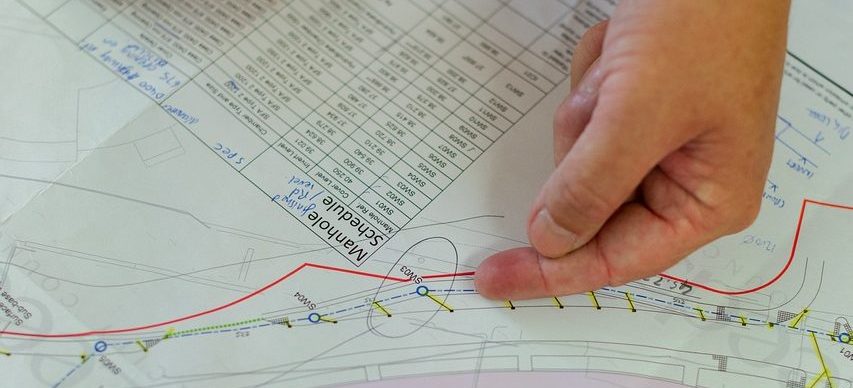
Information system maps (IS map) should not be limited to a static snapshot of the current information system — it must be a tool for projecting into the future and steering what comes next.
Why do projects belong in the IS map?
A map that lacks a project dimension is incomplete, even misleading, since it omits transformations already underway. Because the information system is in constant evolution, a purely static map becomes obsolete the moment it is published. Incorporating projects into the map makes it possible to visualize and manage this ongoing change.
What do you gain by connecting projects to the map?
Every project transforms the Information System. Integrating projects into the map allows you to track this continuous evolution, ensure consistency across plannings and cross-cutting architecture decisions, and shed light on dependencies (sequencing) and potential conflicts (multiple projects drawing on the same team simultaneously, functional overlap between solutions, etc.).
Modeling the project dimension enables a cross-functional understanding of the direct and indirect impacts on each component. It informs trade-off decisions through a shared reference framework. Visualizing these impacts helps better anticipate team workload and realistically plan the key milestones of the transformation.
It also ensures the strategic alignment of projects with business objectives by visualizing impacts across the different layers of the IS. It helps identify how changes in the « upper » layers (processes, applications) could affect requirements in the « lower » layers (infrastructure): business continuity plan (BCP), security policy, etc. — and vice versa.
When should you model projects in your map?
The IT map is ideal for:
- Consolidating the company’s project roadmap, evaluating project impacts on the IS, and helping prioritize and arbitrate between initiatives.
- Defining and simulating major evolution milestones as part of a master plan or large-scale transformation program.
- Visualizing the IS integration roadmap during mergers and acquisitions.
Our Solutions

IT Live Maps natively supports this dynamic with:
- Project portfolio management (PPM) with a macro-planning view of IS transformation milestones (optionally fed from an external PPM tool) — for PMOs and CIOs.
- Application portfolio management (APM) with application lifecycle and project impact visibility.
- Tracking adapted to projects and programs of all sizes, each transforming the IS at its own scale.
- An explicit link between a transformation activity and its real impact (addition, modification, or removal of a component), allowing you to visualize how the IS evolves over time while keeping a record of the origin of each change.
- Centralized documentation of architecture decisions tied to projects.
- Clear visibility, for application or domain owners, of how the global roadmap affects their own scope.
Discover the use case: IT System Transformation Through Projects